Thinking about turning a bonus room into a year-round golf bay or a private sauna and steam retreat? In College Grove, the right plan can give you daily convenience while protecting your home’s value. This guide walks you through the space, power, permits, costs, and timeline so you can build smart and avoid surprises. Let’s dive in.
Plan your space first
A great setup starts with the right room. Popular locations include basements, finished garages, bonus rooms, or outbuildings. Each option has trade-offs around headroom, moisture, and access, so choose the one that best supports your layout and utilities.
Golf simulator room basics
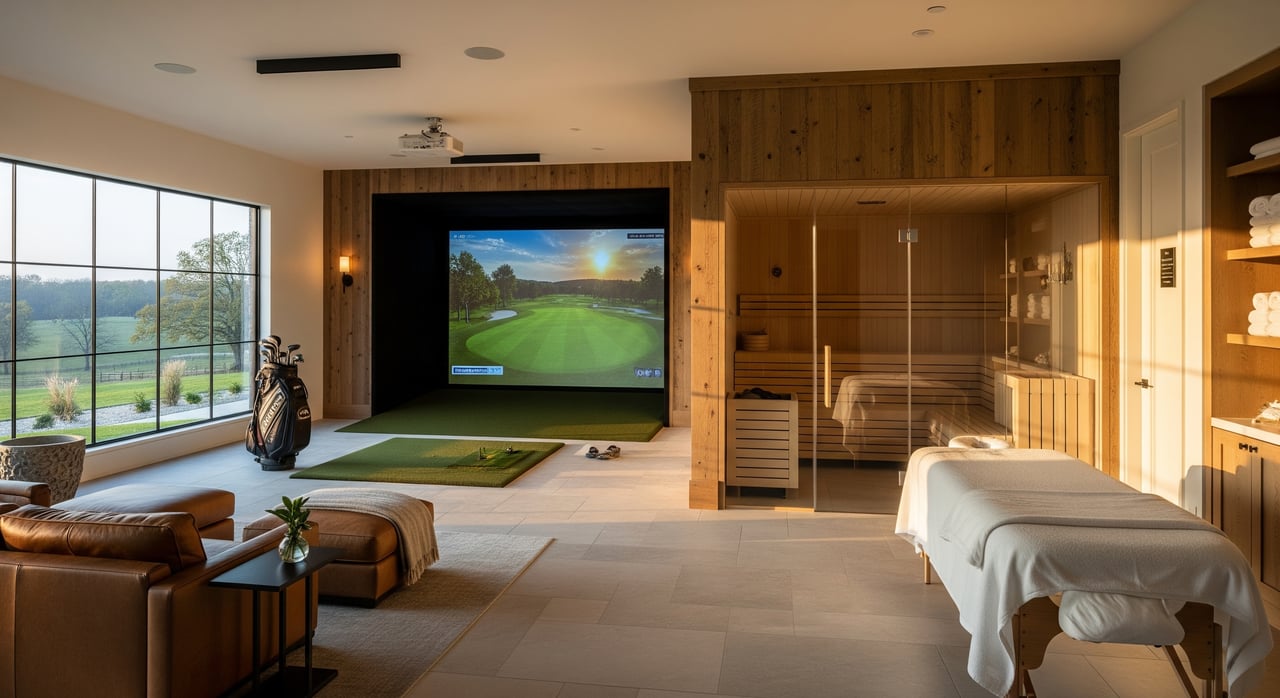
For most camera-based systems, comfortable setups often need roughly 12 to 18 feet of depth, 10 to 15 feet of width, and around 9 to 10 feet of ceiling height. Exact needs vary by model, so check specs and test a full driver swing where you plan to stand. Guidance for popular camera systems explains minimums and recommends taller ceilings for comfort in this space planning overview.
Use a proper hitting mat, an impact screen, and enclosure netting. Short-throw or ultra short-throw projectors are common, and many draw about 120 to 330 watts. For example, this 4K short-throw model lists typical power consumption in that range, which helps with electrical planning and heat load expectations on this product spec page.
Wellness suite layout
Infrared saunas range from compact one-person cabins to larger multi-person units. Many smaller models run on a dedicated 120V circuit while larger premium models require 240V and 15 to 25 amp breakers. Review your chosen model’s clearance and circuit requirements before you frame or wire using manufacturer guidance.
Steam showers require a generator sized to the enclosure’s cubic footage. Typical residential units need a dedicated 240V feed, a water supply, a 3/4 inch steam line, and a safety relief drain. Installation manuals outline rough-in locations, clearances, and piping details as shown in this Steamist manual.
Moisture and comfort in Middle Tennessee
College Grove sits in a humid-subtropical climate, so moisture control is critical for basements and any indoor wet areas. Plan for dehumidification, waterproof finishes, and adequate ventilation to protect finishes and equipment. A regional climate overview for Nashville helps explain why humidity planning matters for year-round comfort in this summary.
Power, HVAC, plumbing: what to expect
Golf electronics are modest compared to wellness equipment, but everything adds up. Projectors and gaming-class PCs can add steady heat and draw hundreds of watts. Saunas and steam generators can require dedicated 240V circuits and may trigger a panel upgrade, so get a load calculation from a licensed electrician early and confirm model requirements.
For steam rooms and indoor hot tubs, specify mechanical ventilation and dehumidification. Use waterproof materials rated for wet areas and keep generators accessible for service per installation manuals. Even infrared saunas benefit from airflow to keep temperatures even and prevent material warping.
Permits and codes in Williamson County
Permitting protects you, your home, and future resale. In unincorporated areas like College Grove, the Williamson County Building Codes Department handles permits and inspections. Confirm what your project requires, from electrical or plumbing to finishing a basement or adding a steam generator, using the county’s permit portal and contact information here.
Williamson County publishes the editions of the International codes it has adopted. Always verify current code adoption and any amendments before you submit plans on the county’s Adopted Codes page. If your home is within a city boundary, check with that city’s codes office. Many neighborhoods also have HOA rules, so confirm any restrictions or approvals you may need.
In Tennessee, contractor licensing rules apply at certain project values. Be aware that state licensing is required above specific thresholds and that licensed electricians and plumbers are typically needed for permitted work. Review state guidance and confirm your contractor’s compliance before you proceed using this state resource.
Costs and operating considerations
Golf simulators range widely based on gear, enclosure quality, and AV. Entry-level DIY builds can start around 1,500 to 5,000 dollars, mid-range home setups around 5,000 to 15,000 dollars, and premium systems can go much higher with pro-grade launch monitors and custom enclosures. A clear breakdown of components and cost drivers can help you set a realistic budget in this buyer’s guide.
Infrared saunas range from hundreds to several thousand dollars, with larger premium models often requiring 240V circuits. Steam showers add generator cost plus plumbing, electrical, and waterproof finishes. Your operating costs include electricity for projectors and PCs, HVAC run time, and any software subscriptions.
For resale, specialty rooms often deliver partial cost recovery but can make your home stand out to the right buyer. National Cost vs. Value reporting shows finished basements and bath upgrades tend to recover a greater share of costs than niche features, so aim for flexible designs that can serve as a media room or gym in the future according to this industry summary.
Who to hire and how the project flows
- General contractor or remodeler for framing, finishes, and project coordination.
- Licensed electrician for panel upgrades and dedicated circuits.
- Licensed plumber for steam generator and any wet areas.
- HVAC contractor for ventilation, exhaust, and dehumidification.
- Simulator integrator or AV pro for screen framing, projector, sensors, and calibration.
A typical timeline: measure and select equipment, confirm HOA and permit needs, complete electrical and mechanical rough-ins, waterproof and finish walls, install and commission equipment, then schedule final inspections.
Quick homeowner checklist
- Measure depth, width, and ceiling height and test your driver swing where you will stand for a simulator.
- Pull spec sheets for your chosen sauna, steam generator, and launch monitor before ordering.
- Ask a licensed electrician for a load calculation and circuit plan.
- Call Williamson County Building Codes to confirm permit types and inspections before starting.
- Plan dehumidification and ventilation for steam rooms, hot tubs, or basements.
- Get three bids, verify licenses and insurance, and ensure installers follow manufacturer specs.
- Keep permits, invoices, and inspection sign-offs for future resale.
A thoughtfully designed golf simulator or wellness suite can elevate daily life in College Grove while staying buyer-friendly. If you are weighing ROI, flexibility, or how to position upgrades when you sell, let’s talk.
Ready to plan your next move with a clear strategy? Connect with Amy Coliano to align your project with your long-term real estate goals.
FAQs
What room size do I need for a home golf simulator?
- Many camera-based systems are comfortable around 12 to 18 feet deep, 10 to 15 feet wide, with ceilings near 9 to 10 feet. Always test a full driver swing in the exact spot before committing.
Do I need permits for a sauna or steam shower in Williamson County?
- Yes, electrical, plumbing, and mechanical work typically require permits, and finishing a basement or adding a steam generator will trigger inspections. Contact Williamson County Building Codes to confirm requirements for your project.
How do I manage humidity for a steam shower or indoor hot tub in College Grove?
- Plan for mechanical ventilation, dehumidification, and waterproof finishes. The region’s humid climate makes moisture control essential for durability and comfort.
How much does a basic home golf simulator cost?
- Entry-level DIY builds often start around 1,500 to 5,000 dollars, while mid-range builds run 5,000 to 15,000 dollars. Premium systems with pro-grade gear can go much higher depending on components and installation.
Will a sauna or steam room require an electrical panel upgrade?
- It depends on your existing capacity and the equipment you choose. Many larger or 240V units need dedicated circuits, so get a load calculation from a licensed electrician early in planning.